
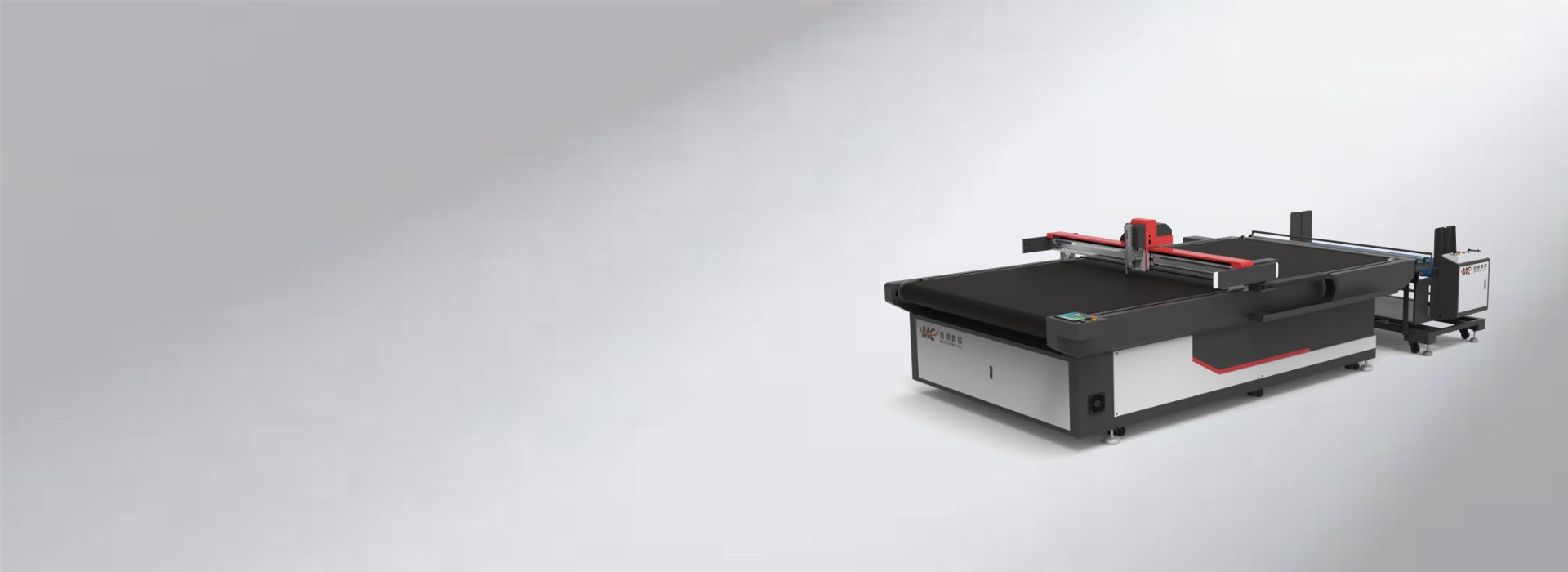
Your Reliable Fiberglass Cutting Machine Supplier in China
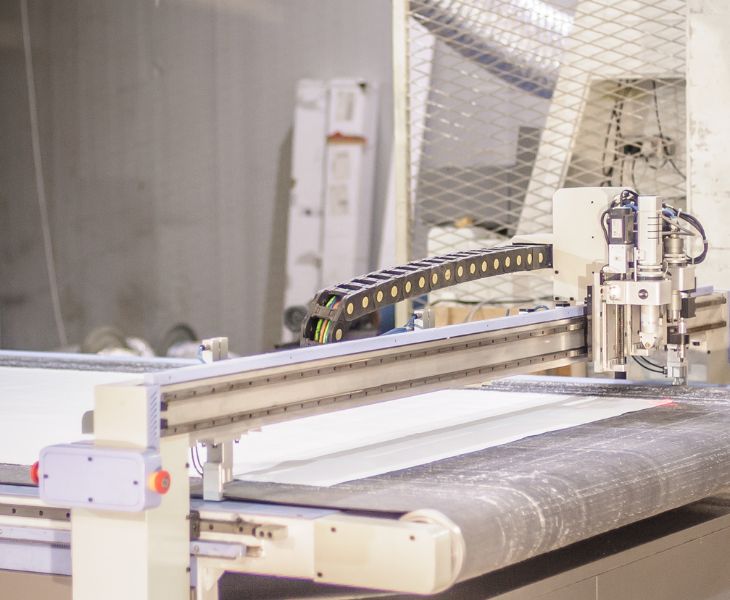
Control cutting tools( like vibration knives, lasers, or milling cutters) through CNC systems to automatically cut fiberglass materials with high precision according to the preset paths. And due to integrated advanced CNC systems, MC fiberglass cutting machines can precisely process complex shapes and contours while keeping smooth edges and minimizing dimensional errors.
What’s more, with highly automated, our fiberglass cutting machines can automatically complete materials positioning, path planning, and cutting, which can greatly reduce manual labor and improve production efficiency.
As a professional manufacturer of glass fiber cutting machines, MC integrates OEM and R&D services. Every fiberglass cutting machine produced at MC undergoes multiple layers of strict quality control, which can provide your business with a good and secure cutting process.
Fiberglass Cutting Machine Classified by Function
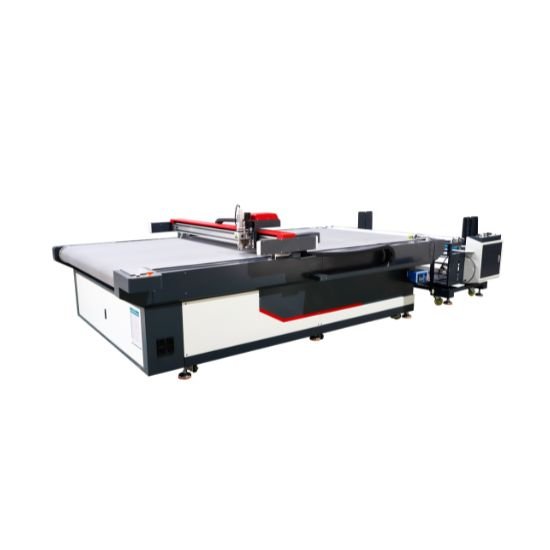
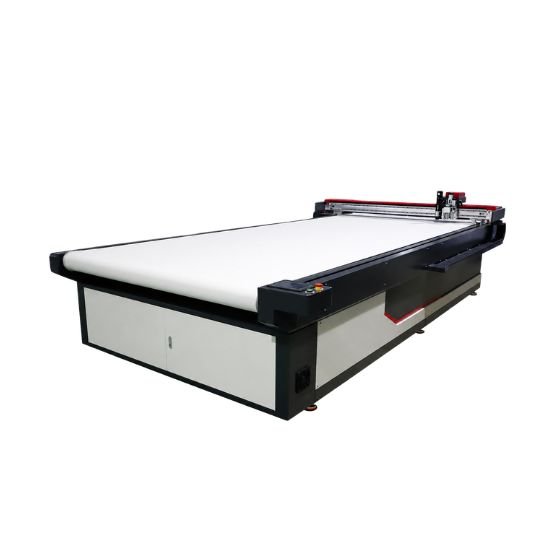
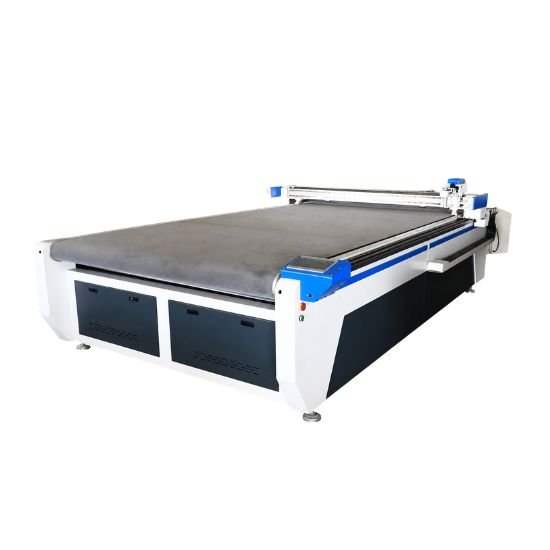
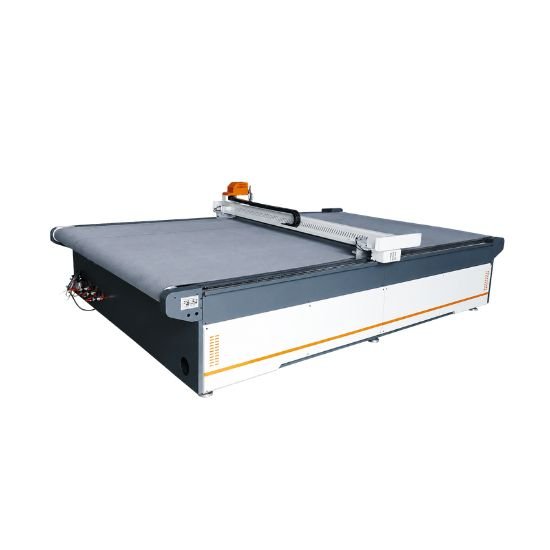
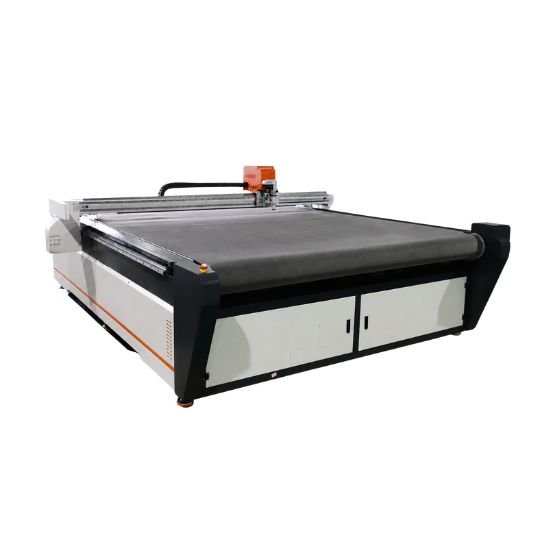
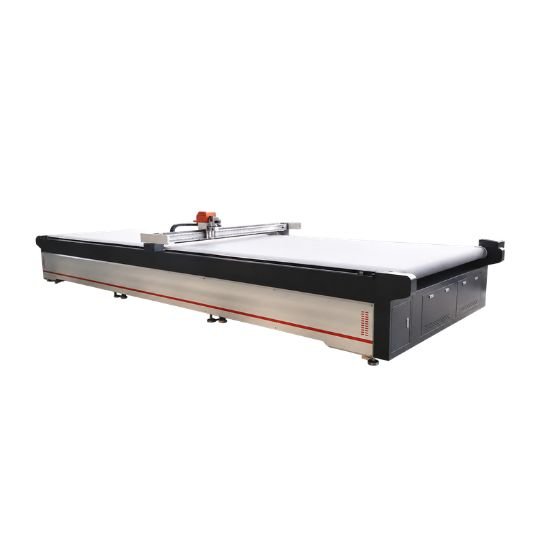
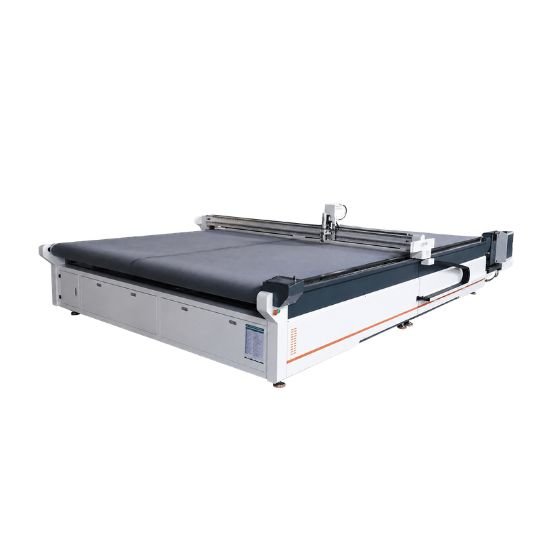
Features of the MC Fiberglass Cutting Machine

CNC systems and servo drives can control paths and speed, and reduce errors with a high-rigidity structure and linear guide rail.

The whole processing flow is highly digitized and automated, without the need for manual intervention in complex operations.

By employing CNC high-precision control systems and specialized cutting tools, stable machining can be performed strictly in accordance with CAD design paths.

Equipped with modular tool systems and adjustable process parameters, which can be flexibly adjusted according to the hardness and structure of different materials.
Intelligent Digital Control System Reduces Material Waste
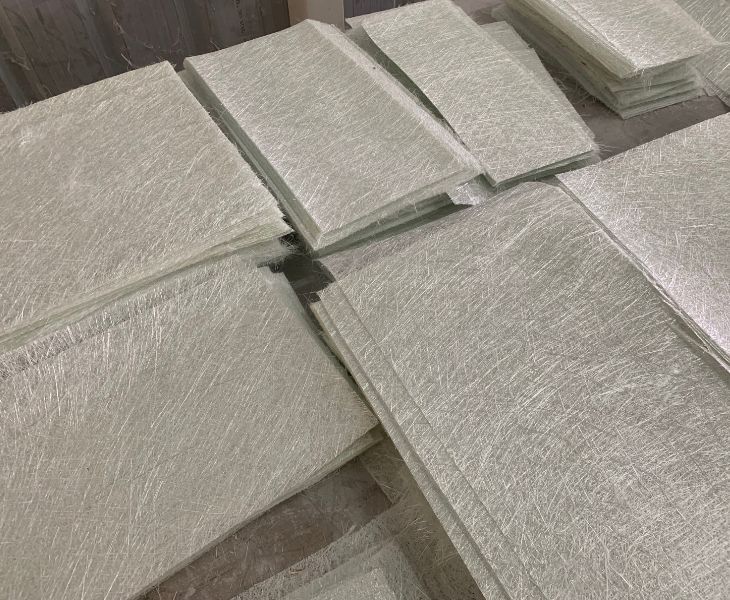
Our fiberglass cutting machines can perform automatic typesetting and path optimization through an intelligent digital control system (CNC+CAD/CAM), which can maximize utilization of raw materials space and reduce waste materials from edges and corners. Simultaneously, precise control of cutting paths and tool movements to avoid human errors and repetitive cutting.
Vacuum Adsorption Working Platform Improves Cutting Stability
The vacuum adsorption worktable firmly fixes materials on the tabletop through strong negative pressure, which can avoid movement, curling, or vibration during the cutting process. While keeping flexible or composite materials in a flat state, guaranteeing a stable and consistent tool running trajectory.
Applications of the Fiberglass Cutting Machine
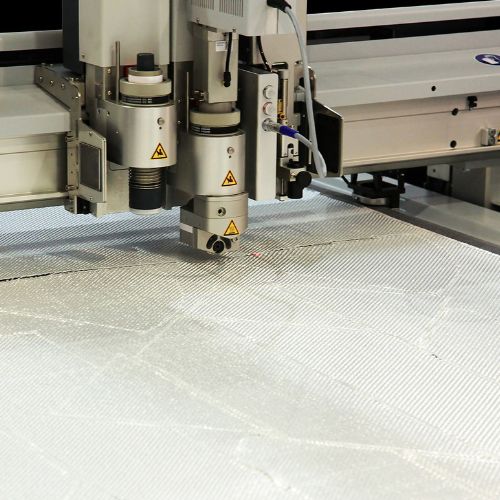
FRP ship hulls, decks, etc., heavily use glass fiber composite materials; fiberglass cutting machines can cut and form these high-strength, corrosion-resistant composites. And the CNC system can process complex surfaces and structural components, and the vibration knife cutting method avoids material delamination or burning.
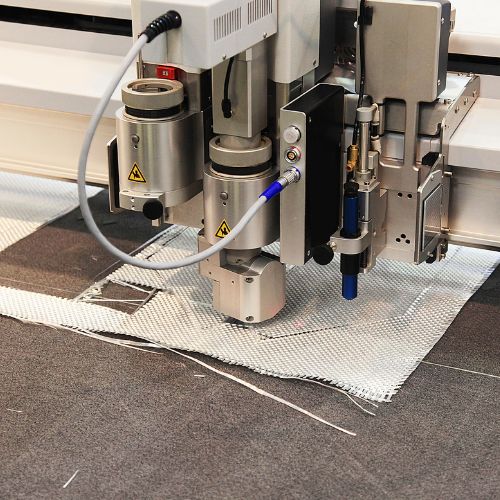
In automotive manufacturing, glass fibers and composite materials are extensively utilized for interior components, bumpers, lightweight structural components, etc. Our fiberglass cutting machine can cut and rapidly prototype complex automotive parts using CNC systems.
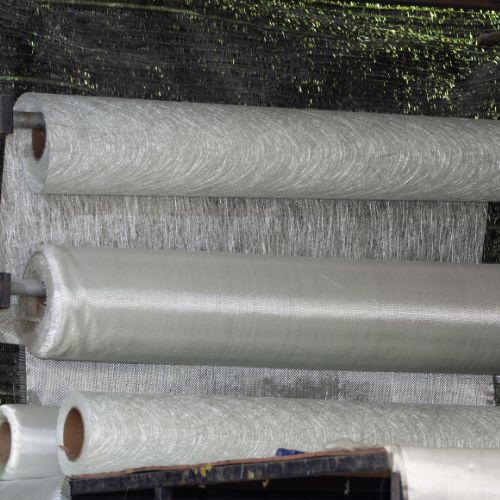
In the wind energy industry, wind turbine blades, nacelle covers, and internal structural components require high cutting accuracy and material integrity. Fiberglass cutting machines combine with vibration knife technology that can avoid material delamination, burning, and fiber pulling problems.
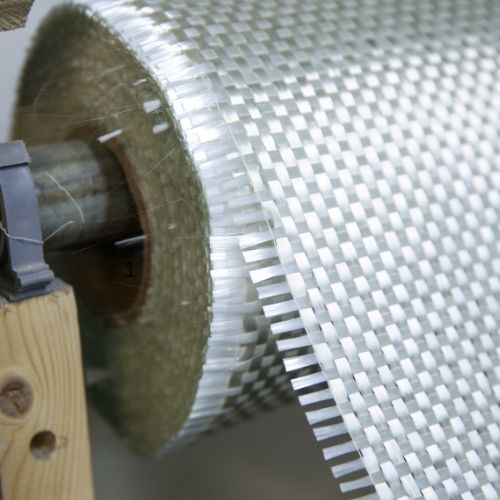
High-performance composite materials require extremely high dimensional accuracy and structural integrity during processing to guarantee flight safety, and performance is heavily used in aircraft interior panels, etc. Fiberglass cutting machines can precisely cut complex curved surfaces and structural parts.
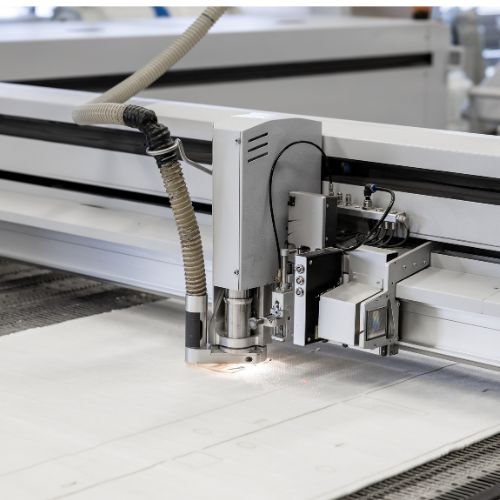
Insulation layers and insulation boards of air ducts are usually made of flexible or semi-rigid materials, which require precise and non-destructive processing. Fiberglass cutting machines can quickly cut complex shapes and use vacuum adsorption platforms to keep material flatness and stability.
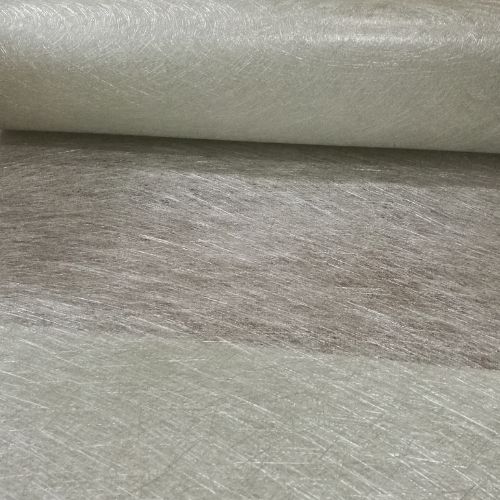
Carbon fibers, Kevlar, etc., feature multi-layer structures and high strength, and have very high requirements for cutting accuracy, edge quality, and material integrity. Fiberglass cutting machines can achieve high-precision path control, combined with cold cutting techniques to avoid high-temperature damage, layering, or fiber pulling.
- Specification
| Parameters | Specification |
| Cutting Speed | 0–1500 mm/s (depends on material & tool) |
| Cutting Material | Fiberglass, composite, foam, insulation materials |
| Positioning Accuracy | ±0.1 mm / ±0.05 mm |
| Repeatability | ±0.02 mm |
| Power Supply | 220V / 380V, 50/60Hz |
| Product model | 1600*2500mm,600*3500mm, 1800*3000mm,2000*3000mm, 2500*3500mm,2000*4000mm, 2000*6000mm |
| Max Cutting Thickness | 0–50 mm (depending on material type & tool configuration) |
Using high-efficiency industrial dust collection systems to collect dust at cutting points in time can avoid spreading the dust into the air. And then employ CNC automated cutting methods to reduce fiber tearing at a stable speed, thereby reducing dust production from fountainheads.
Simultaneously, choose low-dust cutting tools and use vacuum adsorption platforms to fix materials to avoid fiber shedding.
Fiberglass cutting machines usually employ diverse cutting tools, which, depending on materials and applications, for example, if you want to cut soft materials, you can use rotating blades.
The configuration, cutting technology, processing size, and degree of automation can determine the price of fiberglass cutting machines. For instance, a mid to high-end device is usually equipped with higher precision servo systems, multi-tool switching functions, and stronger structural stability, which can satisfy the needs of complex shapes and large-scale continuous production, so its price is higher.
You should pay more attention to the following points:
- Regularly clean up fiberglass dust on the device’s countertop, guide rails, and body.
- Clean or replace the filter in time.
- Replace cutting tools in time according to wear and tear.
- Regularly lubricate transmission components like guide rails and screws.
- Regularly inspect electrical and control systems.
How Often Should Fiberglass Cutting Blades Be Replaced?
The replacement cycle of fiberglass cutting blades depends on the strength of use, material hardness, and production frequency. Ordinary, mild use requires replacement every 2-4 weeks.
However, if there are rough cutting edges when using them, you should replace blades in time to guarantee stable cutting quality.
The service life of fiberglass cutting machines is usually around 8 to 15 years, depending on device quality, usage intensity, and maintenance.
Fiberglass cutting machines, as industrial CNC devices, typically require relevant safety, quality, and environmental certifications to satisfy the entry requirements of different countries and markets, like CE, ISO 9001, and EMC.
Fiberglass cannot guarantee absolute absence of burrs or delamination after cutting, but with appropriate devices and process conditions, these issues can be reduced to a very low level, even reaching almost no need for secondary processing.
What Is a Fiberglass Cutting Machine?
The Fiberglass cutting machine is an industrial-grade cutting device specifically designed to precisely shape glass fiber materials into specific shapes, sizes, and patterns.
Unlike traditional manual cutting methods, fiberglass cutting machines employ CNC technology and automated cutting tools, which can achieve faster, cleaner, and more precise cuts while reducing material waste and labor costs.
Fiberglass Cutting vs Laser Cutting vs CNC Knife Cutting vs Manual Cutting
| Features | Fiberglass Cutting | Laser Cutting | CNC Knife Cutting | Manual Cutting |
| Cutting Precision | High (±0.1 mm / better) | Very High | High | Low |
| Cutting Speed | High | Very High | Medium–High | Low |
| Heat Affected Zone | None | Yes (burning risk) | None | None |
| Material Compatibility | Excellent (fiberglass, composite, foam, insulation) | Limited (risk of burning some composites) | Excellent (flexible & soft materials) | Limited |
| Edge Quality | Smooth, clean, no fraying | Smooth but may char edges | Very clean, no thermal damage | Uneven |
| Safety Level | High | Medium (laser risk) | High | Low |
| Automation Level | Fully CNC automated | Fully automated | Fully automated | Manual |
| Material Waste | Low | Low–Medium | Low | High |
| Production Efficiency | High | Very high | High | Very low |
How to Choose the Right Fiberglass Cutting Machine?
Define Your Fiberglass Material Type
You can select a fiberglass cutting machine based on the types of fiberglass materials you want to process, because different fiberglass materials have significant differences in thickness, density, structure, and processing performances, and have completely different requirements for cutting methods and device configuration.
For instance, flexible fiberglass materials are more ideal for CNC vibration cutting, while hard composite panels require a more rigid cutting system.
Check Material Thickness and Density
Different fiberglass materials have obvious differences in thickness and density, which can directly affect the required tool strength, driving power, and device structure for cutting.
What’s more, if device selection does not fit, it is easy to encounter incomplete cutting, edge burrs, or low efficiency.
Consider Your Production Volume
You need to figure out the output required by your company. If you want to perform large-scale continuous production, you need to choose a device with fully automated, high-speed, and equipped with automatic feeding and typesetting systems.
By matching production scale and selecting the device, it’s possible to effectively avoid problems of overcapacity or insufficient devices.
Evaluate Cutting Precision Requirements
You need to consider cutting precision requirements according to application areas. Because if the device accuracy does not fit the actual requirements, it may either cause cost waste or affect product quality.
Therefore, selecting a fiberglass cutting machine by evaluating accuracy requirements can achieve the optimal counterbalance between cost and performance while guaranteeing processing quality.
Pay Attention to Dust Collection and Safety
During the cutting process of fiberglass, small and irritating dust is generated. If operators inhale or diffuse it into the work conditions for a long time, it will have an impact on the health and production safety of the operator.
So, selecting a fiberglass cutting machine with comprehensive dust collection and safety protection functions can improve the safety of working conditions and comply with industrial health and environmental criteria.
Check Tool Compatibility
Different devices support different cutting tools or processing methods. For example, vibration knives are ideal for flexible fiberglass cloth and thin-layer composite materials, while some special processes may require a multi-tool switching system.
If the tool does not fit the material, it is easy to have incomplete cutting, increased edge burrs, or rapid tool wear.
Evaluate Software and CNC Control System
The cutting accuracy, automation level, and production efficiency of different fiberglass cutting machines largely depend on their software and CNC control systems.
Consequently, if the performance of the control system is insufficient, it may reduce cutting accuracy and may also increase operational difficulty and production error rates.