
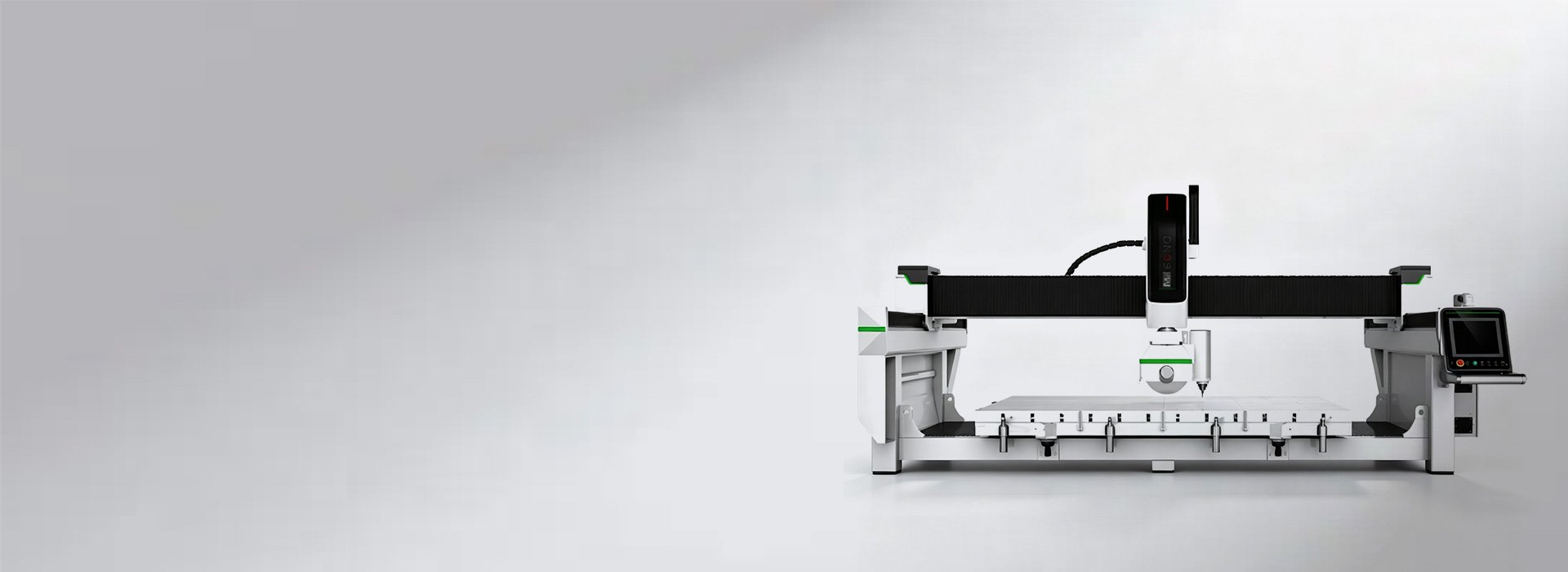
Your Reliable 4-Axis CNC Router Supplier from China
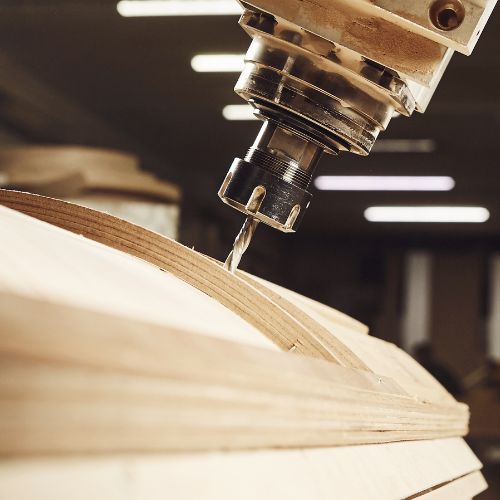
A 4-axis CNC router integrates an additional rotary axis (A-axis), enabling coordinated multi-axis machining of cylindrical and complex 3D geometries in a single setup.
MC’s 4-axis CNC router can produce complex carving patterns that are not possible with standard 3-axis machines. No matter what type of curved surface products you work with, our machines can precisely machine and shape them. In addition, the CNC control system ensures machining accuracy while also improving overall production automation, significantly shortening your production cycle.
As a reliable 4-axis CNC router supplier in China, we provide customized OEM services to help you complete more precise machining tasks. All our machines undergo strict quality inspection and 48-hour continuous operation testing before delivery to ensure stable long-term performance. Even in case of any issue, our engineers will offer fast-response after-sales support to ensure your machines run smoothly.
If you are interested in our routers and require a CNC solution, please contact us!
Types of 4-Axis CNC Routers
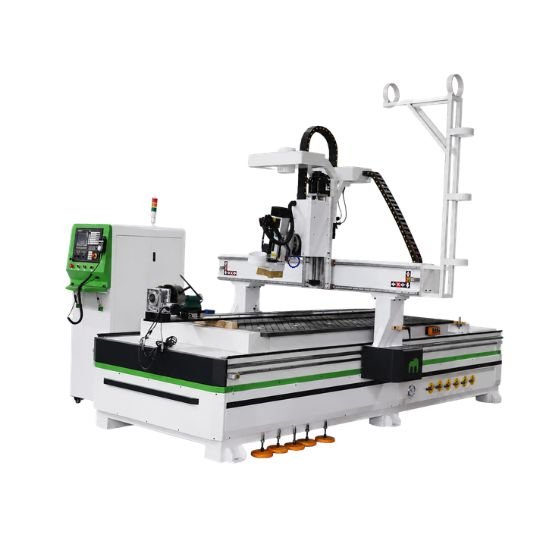
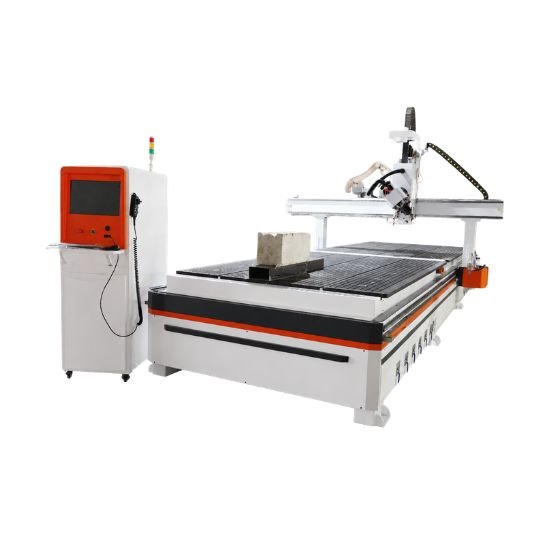
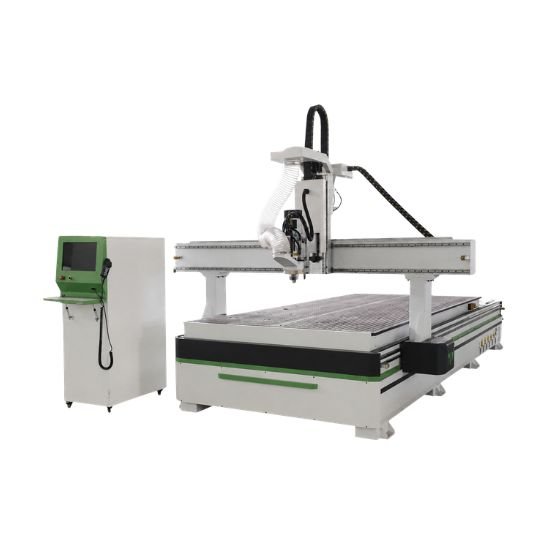
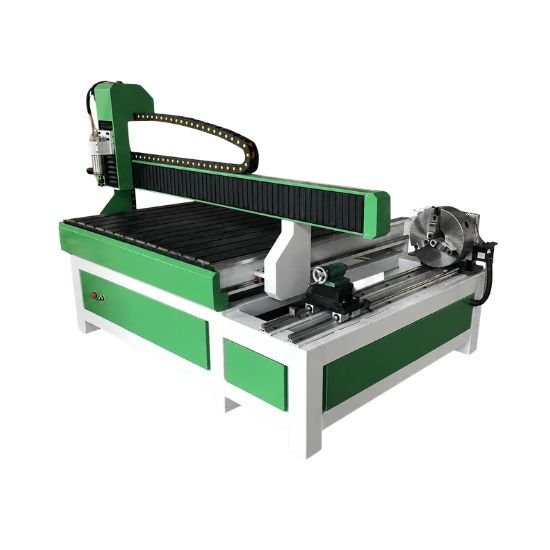
MC 4-Axis CNC Router’s Features

The multi-axis control system can improve machining precision and repeatability up to ±0.05 mm, which realizes consistent carving results in daily production.

It can process intricate patterns, curved surfaces, and irregular shapes, making it suitable for high-end customized manufacturing.

Multi-axis movement enables smoother cutting performance and reduces post-processing work by up to 50%, helping improve your product quality.

Can process various materials like wood, foam, plastics, composites, and other materials, satisfying your different product needs.

The system supports automatic tool changing and intelligent positioning, reducing manual intervention and helping lower your labor and operator training costs by up to 40%.

Precise machining control helps reduce material waste and improve utilization by 10%–15%, especially for high-value production materials.

The rigid machine structure ensures stable performance during long-term continuous operation, making it ideal for industrial-scale production.

You can select different configurations, such as ATC systems, vacuum tables, and dust collection systems, according to special production requirements.
Complex 3D Surface Machining
The 4-axis CNC routers can continuously adjust the tool angle during machining. This allows the machine to access complex curved surfaces and irregular geometries more easily. Whether you want to produce reliefs, sculptures, or irregular molds, it can be achieved reliably. As a result, you can take on more complex orders with confidence.
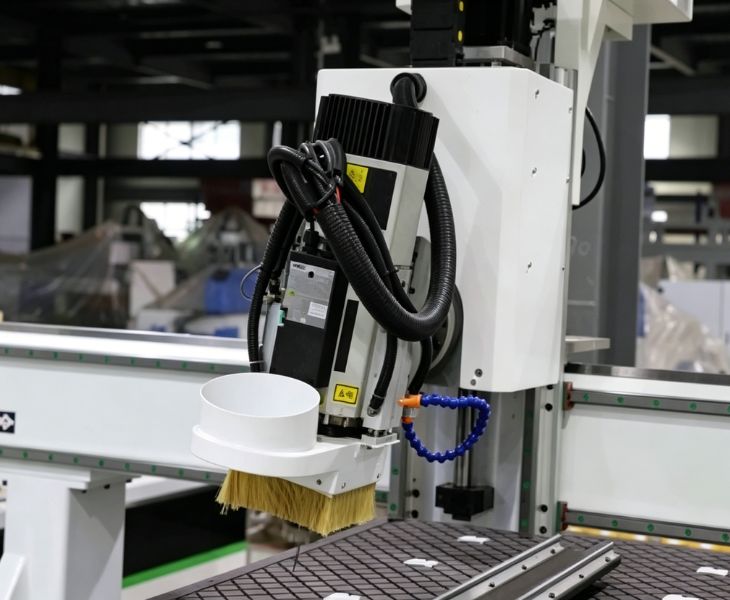
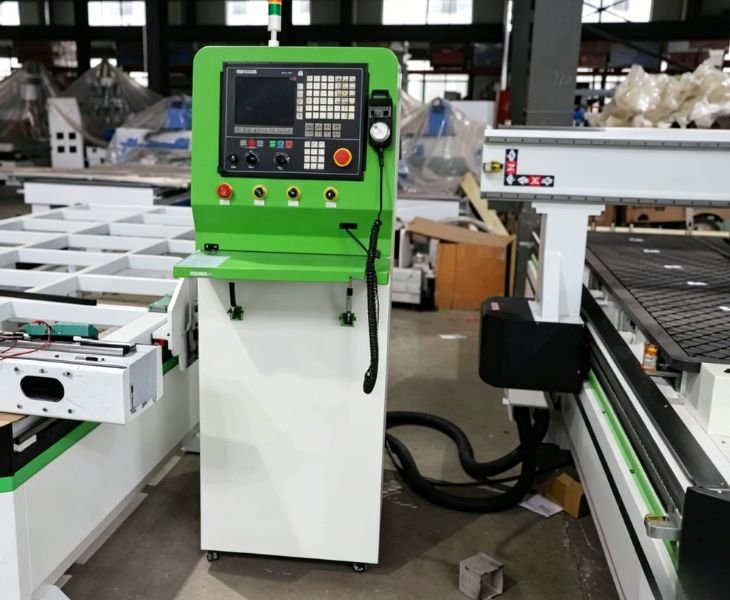
Strong CAD/CAM Compatibility
Our CNC routers are compatible with many mainstream CAD/CAM software, ensuring a smooth workflow from design to machining. With stable software integration, you can efficiently generate toolpaths and improve programming efficiency. You don’t need to change the existing production process, which allows you to get started quickly and reduce setup time.
Single Setup Machining
The 4-axis CNC routers can complete machining in a single setup without repeated repositioning. This helps reduce errors caused by manual re-clamping and improves machining consistency. At the same time, fewer setup steps help shorten production time and make your workflow more efficient by up to 60%. This makes it more suitable for high-precision batch production.
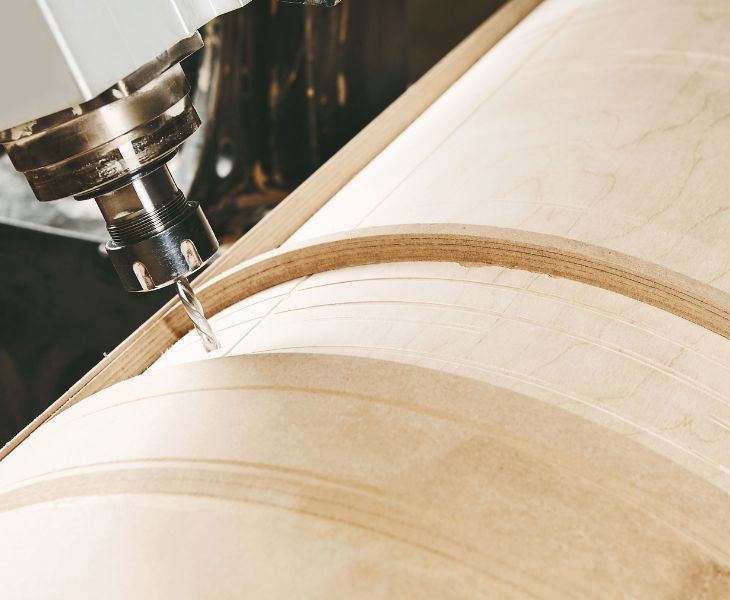
Applications of 4-Axis CNC Routers
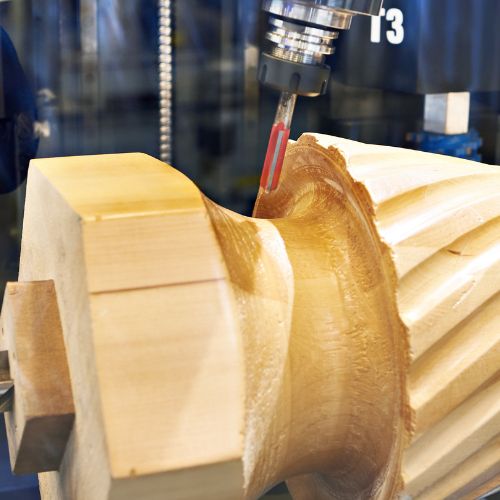
Equipped with a 4th axis, CNC routers can precisely process furniture legs, stair columns, and complex woodworking structures without repeated repositioning. This improves machining efficiency and helps you produce custom furniture and decorative wood products more easily.
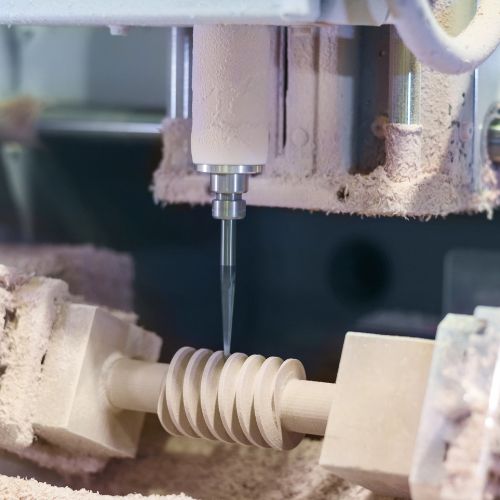
4-axis CNC routers can precisely machine complex curved surfaces and irregular structures, making them ideal for mold making and rapid prototyping. They can also help accelerate prototype development and shorten your product development cycles.
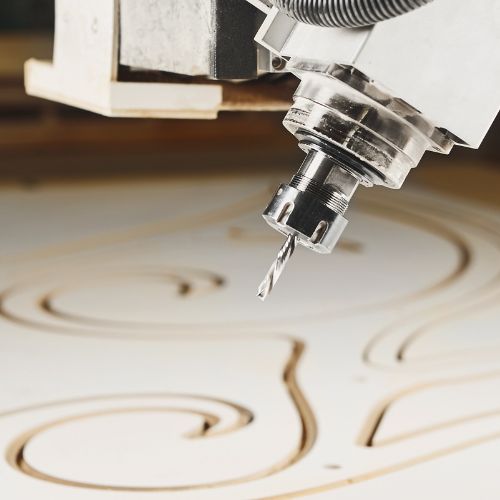
The CNC routers can precisely process 3D letters, advertising signs, and decorative panels with refined engraving results. They also support flexible customization, enhancing the visual appeal of your advertising products.
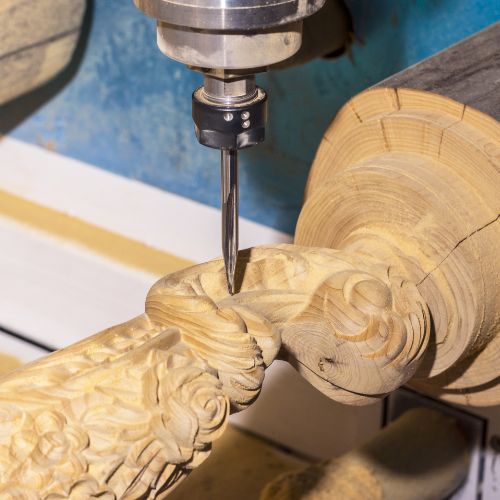
4-axis CNC routers can continuously machine complex 3D curved surfaces. They can accurately reproduce intricate artistic details while reducing manual polishing work. This enables you to complete high-quality 3D carving projects more efficiently.
The routers can precisely process complex component prototypes, making them well-suited for product development and sample testing in the automotive and marine industries. They also help accelerate your product verification and improve machining stability for complex parts.
- Specification
| Category | Specification |
| Working Area | 1325(1300 × 2500 mm)/1212(1200 × 1200 mm) |
| 4th Axis | Rotary Axis / Swing Head (Optional) |
| Spindle Power | 3.0 – 9.0 kW |
| Spindle Speed | 0 – 24,000 RPM |
| Drive System | Servo Motor / Stepper Motor (Optional) |
| Transmission | X/Y: Rack & Pinion, Z: Ball Screw |
| Control System | DSP / Mach3 / Syntec (Optional) |
| Positioning Accuracy | ±0.05 – 0.1 mm |
| Software Compatibility | CAD/CAM Software Supported |
| Power Supply | 220V / 380V |
A 3-axis CNC router works in X, Y, and Z directions and is mainly used for flat sheet processing. A 4-axis CNC router adds a rotary axis, allowing the machine to process cylindrical parts and multi-sided machining without repositioning the material. If you want to produce complex 3D workpieces, please consider a 4-Axis router.
The price of a 4-axis CNC router usually ranges from $6,000 to over $25,000. The exact cost depends on factors such as working size, spindle power, rotary axis type, and control system. If you have specific processing requirements, we can recommend the most suitable configuration and provide an accurate quotation for you.
Yes. For small businesses, a 4-axis CNC router helps you take higher-value orders and expand production without significantly increasing labor costs. It allows you to produce complex parts such as 3D components, furniture parts, and cylindrical products. As a result, you can enhance production capability and achieve a better ROI.
Basic machine operation is similar to a 3-axis CNC router. However, 4-axis machining requires some CAM software knowledge for toolpath generation. But don’t worry. With our proper training and step-by-step guidance, your operators can quickly learn how to use the machine and start production efficiently.
Yes. Our goal is to ensure your machine is installed correctly and runs smoothly. We provide remote installation guidance, video tutorials, and step-by-step technical support to help you complete machine setup professionally. For more complex projects, on-site installation support can also be arranged if required.
Yes. We provide you with spare parts supply, warranty service, and long-term technical support to ensure your machine runs stably and minimizes downtime. Our after-sales team is always available to support you throughout the entire service life of your machine. If you need any spare parts or technical assistance, feel free to contact us anytime.
Indexed vs Continuous 4-Axis CNC Routers
An indexed 4-axis CNC rotates the workpiece to a fixed angle and then performs machining while the rotary axis remains stationary. A continuous 4-axis CNC allows the rotary axis to move continuously during machining.
The main differences between these two types are shown below:
Overall, we recommend you choose an indexed 4-axis for 80% of woodworking applications and a continuous 4-axis for advanced 3D sculpture production.
| Feature | Indexed 4-Axis CNC | Continuous 4-Axis CNC |
| Machining Method | Rotates to position, then stops | Rotates while machining |
| Complexity | Simpler operations | More advanced 3D machining |
| Precision | High for multi-face work | Higher for complex curved surfaces |
| Programming | Easier CAM setup | Requires advanced CAM |
| Cost | Lower investment | Higher investment |
| Best For | Furniture, signage, basic woodworking | Sculpture, molds, complex 3D parts |
How to Choose the Right 4-Axis CNC Router?
4-Axis Type
If you are mainly doing cylindrical carving, such as furniture legs, stair balusters, or column engraving, an indexed 4-axis CNC router is sufficient. However, if you want to achieve complex and high-end 3D surface machining, a continuous 4-axis CNC router is the better choice. These two types will directly determine your product complexity and your market positioning.
Machining Size
Machining size mainly includes rotary diameter and working length. The rotary diameter determines the maximum material thickness you can clamp, while the working length defines how long the workpiece can be processed. If you choose the wrong size, even a high-performance machine may not meet your production needs and may require product redesign.
Machine Rigidity
A well-built machine usually adopts a heavy-duty steel structure and high-quality linear guide rails. It maintains stability during high-speed cutting and can effectively reduce vibration. In contrast, insufficient rigidity may cause tool marks, burrs, and dimensional inaccuracy. To ensure fine-quality results, you need to choose a CNC router with a rigid machine structure.
Spindle & Drive System
The spindle and drive system determine cutting performance and machining efficiency. Once you select a higher spindle power, the machine can provide stronger cutting ability for harder materials and deeper cutting. In addition, servo motors offer higher precision and stability compared to stepper motors, especially for 4-axis coordinated machining applications.
Control System & Software
The control system and software are the key link between design and machining. Only by choosing a CNC router with good software compatibility can you smoothly import common design files and perform 4-axis post-processing. Once the system is incompatible or too complex, your learning costs will increase, and production errors will rise sharply.