
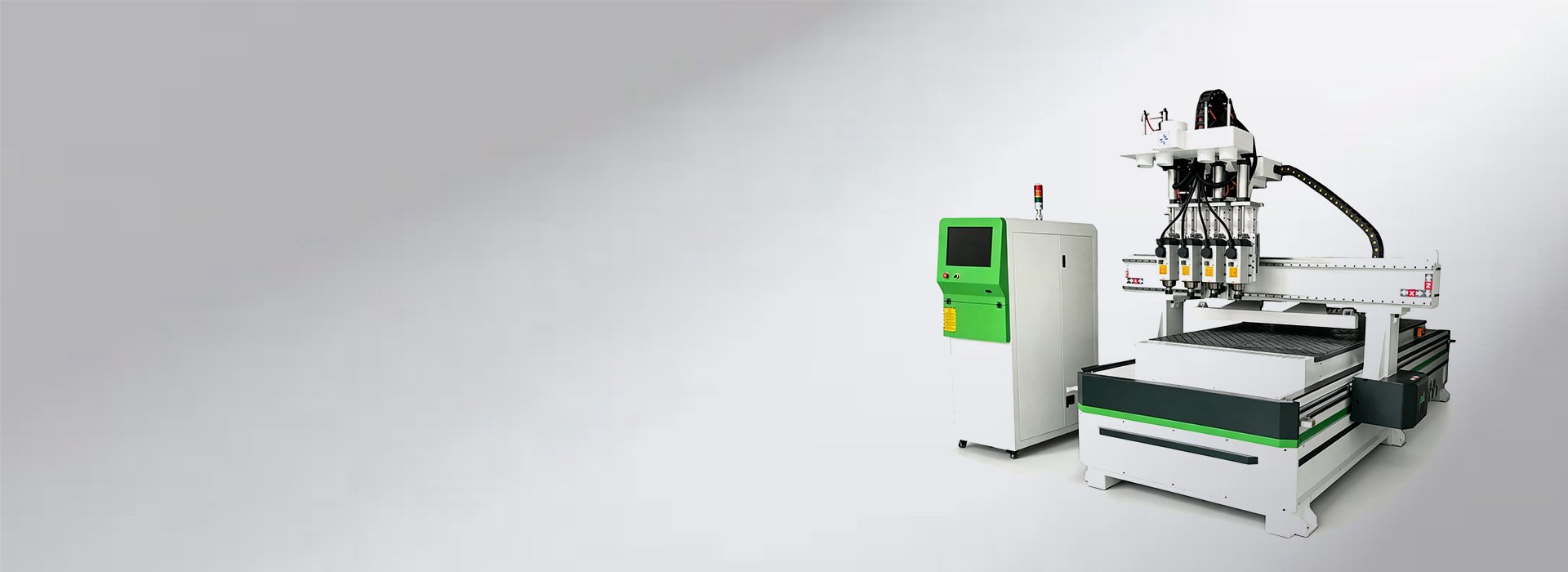
Your Reliable 3D CNC Router Supplier in China
MC 3D CNC routers first generate tool paths and G-code programs through CAD/CAM software, and then control multi-axis linkage motion through the CNC system to drive high-speed rotating tools for automatic machining of materials.
With its multi-axis structure and multi-tool configuration, the devices can achieve integrated processing of various processes like 3D carving, cutting, milling, slotting, etc.
Besides, our 3D CNC routers with automated CNC machining can complete multiple processes in one go, and if your business wants to process different materials, you only need to replace cutting tools or adjust processing parameters, without replacing the entire device.
As a reliable 3D CNC router manufacturer, MC has abundant industry experience, OEM service, and integrates R&D, sales, and after-sales service. Our 3D CNC routers are all prepared in compliant production processes and have strict quality assurance, which can give your business a safe and reliable carving process.
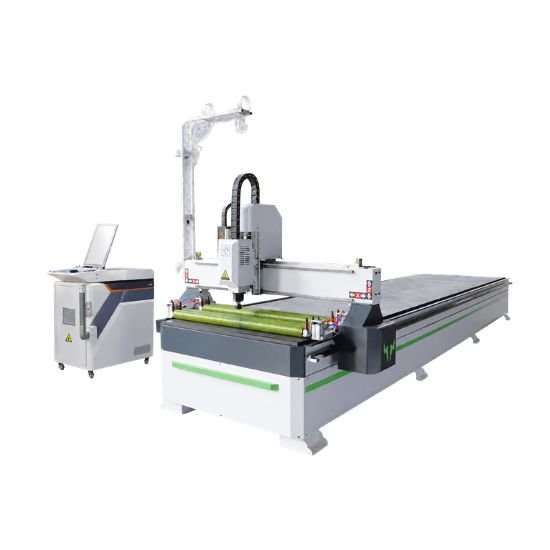
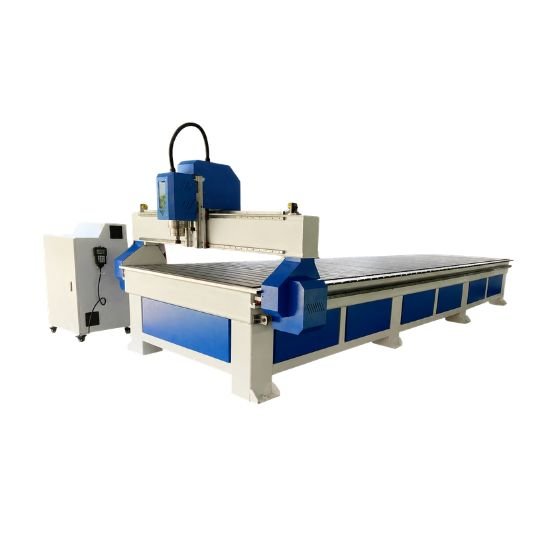
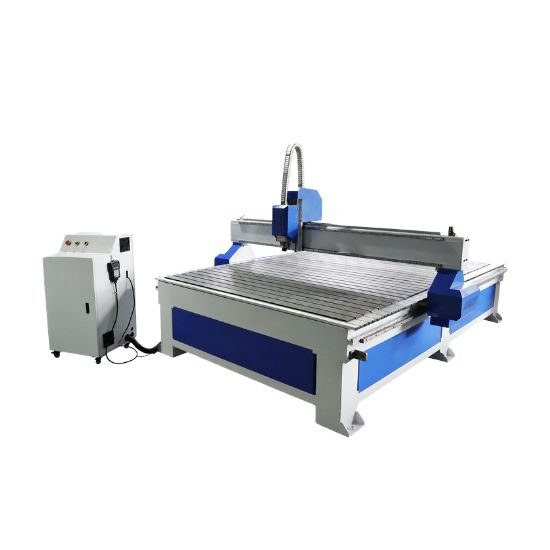
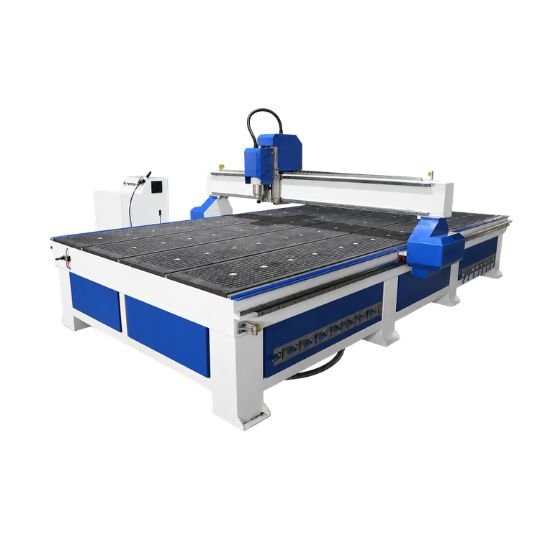
3D CNC Router Classified by Function Type
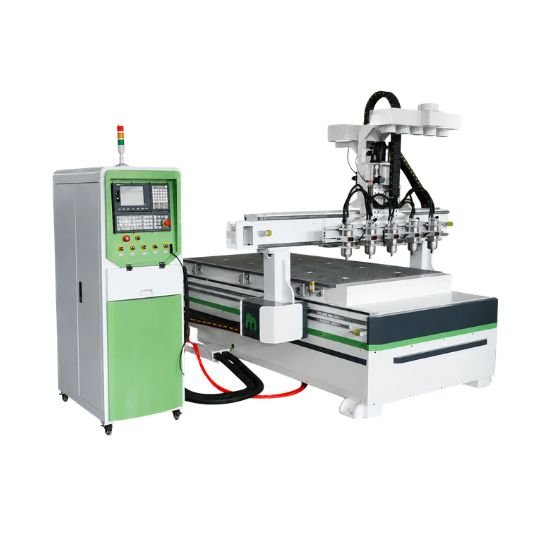
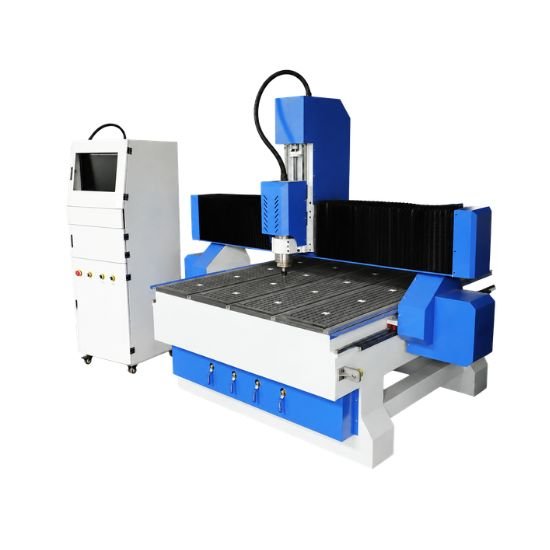
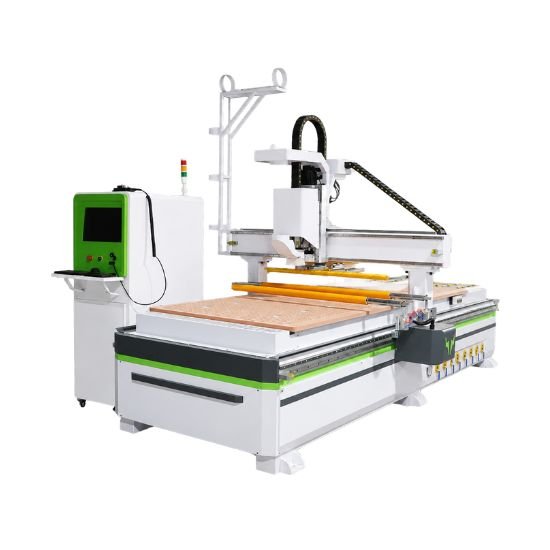
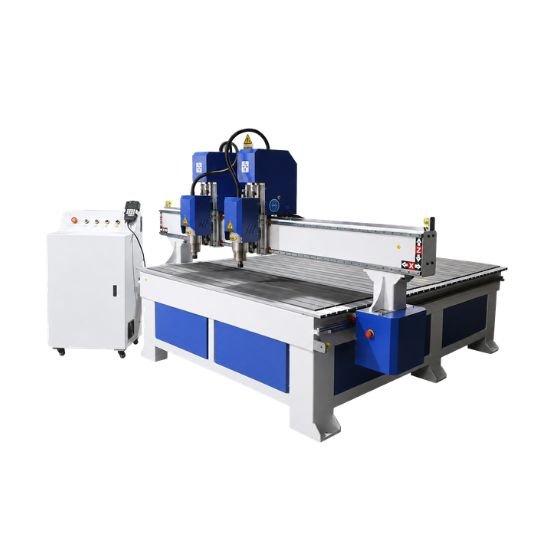
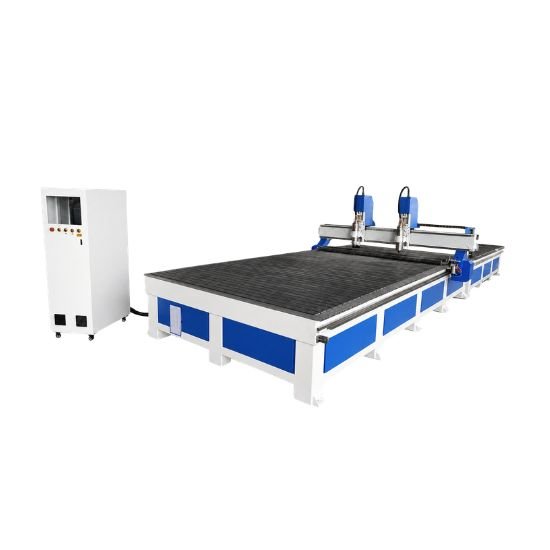
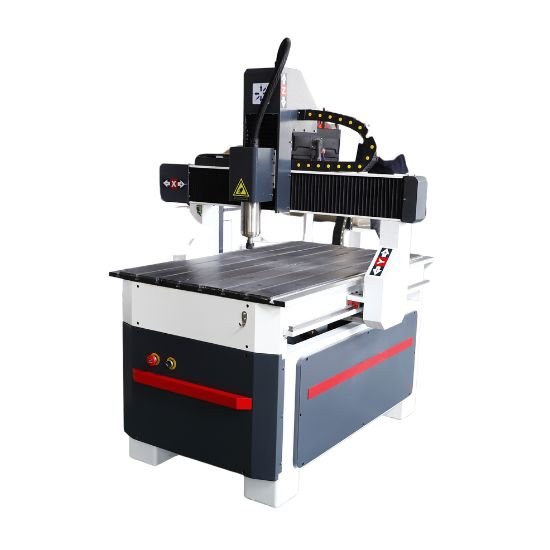
Features of the MC 3D CNC Router

Integrating CAD/CAM software with automatic compensation functionality can guarantee dimensional consistency when processing complex curved surfaces and structures.

Using high-power spindles, multi-tool options, and adjustable cutting parameters, materials of different hardness and thickness can be processed.

With high-precision servo systems, optimized tool path programming can quickly cut various materials and support automatic tool changing and multi-layer machining.

Compatible with multi-materials, and can meet the diverse needs of different industries through flexible cutting tools and machining programs.
Robust Mechanical Design Reduces Maintenance Frequency
The sturdy and durable mechanical structures, high-precision linear guide rails, and high-quality transmission systems can guarantee the stability of the entire 3D CNC routers in long-term high-intensity processing, reducing vibration and structural deformation.
This can also guarantee machining accuracy and surface quality, while reducing device failure rates and maintenance frequency.
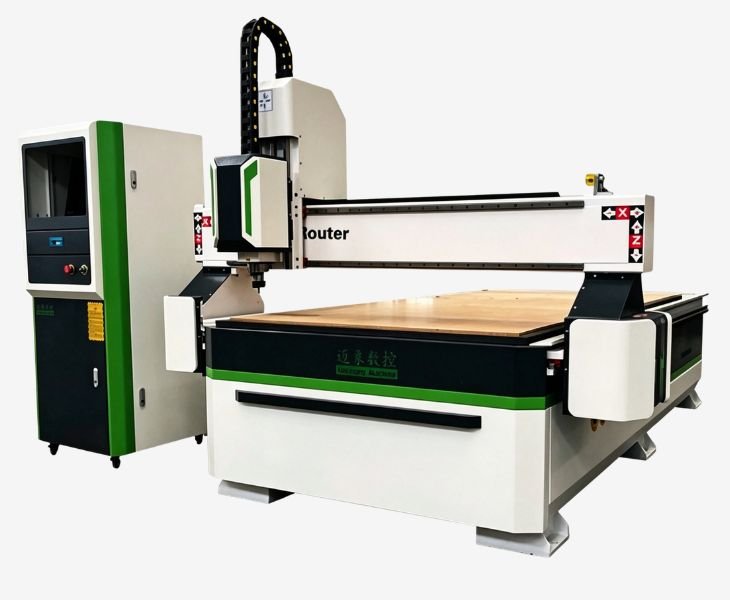
Intelligent Software Integration Reduces Human Error
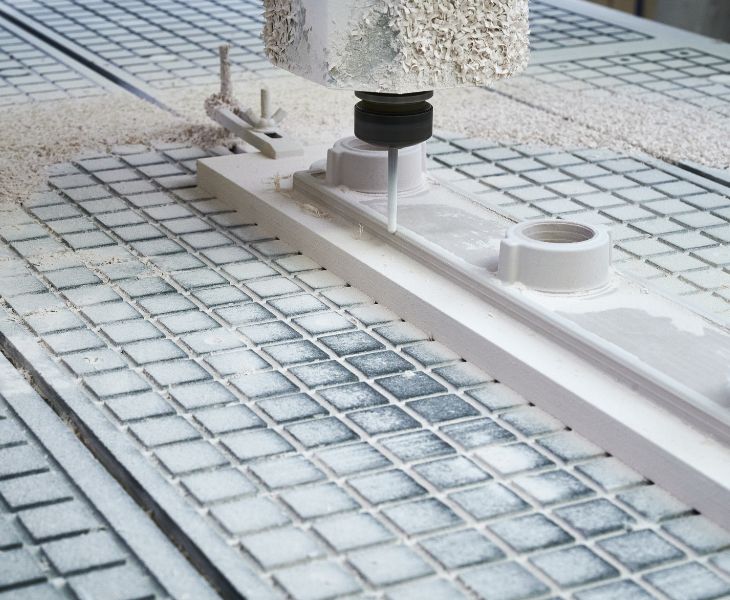
The intelligent software integration systems can directly read CAD/CAM design files, achieve automatic tool path production, and provide machining control. And 3D CNC routers can guarantee consistency in machining dimensions and accuracy in complex 3D shapes, and reduce human intervention and operation errors by programmatic operations and precise motion control.
Applications of the 3D CNC Router
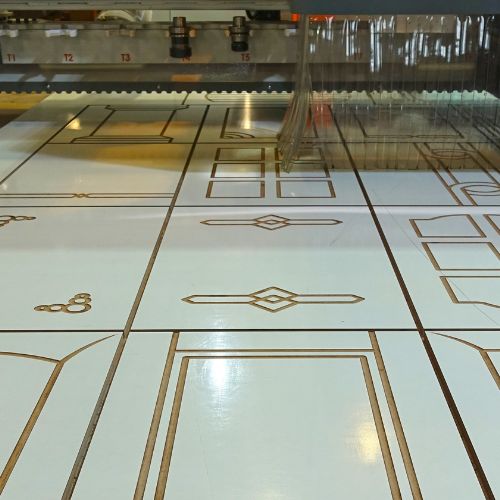
Wooden components like cabinet doors, chair legs, etc, often have complex shapes, requiring precise carving or cutting. Our 3D CNC routers can guarantee each part has consistent dimensions, smooth surfaces, and fine details according to CAD designs or digital templates.
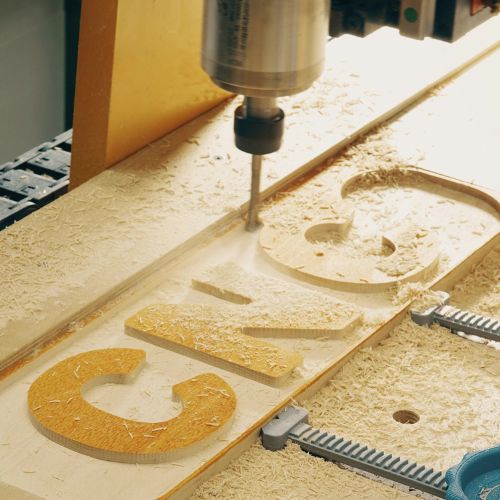
Advertising and signage components like 3D letters and decorative signs are often difficult to process due to their complex shapes. However, 3D CNC routers can perform precise processing and enhance visual effects based on digital templates.
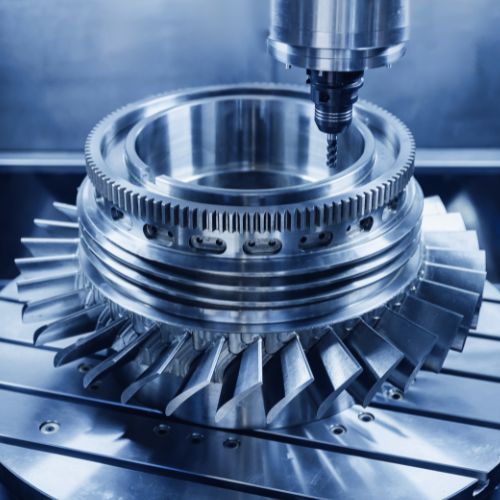
In the aerospace industry, components like interior panels, composite parts, etc, usually feature complex geometries and stringent tolerance requirements. The 3D CNC routers can guarantee that each part meets strict engineering criteria by precisely milling, cutting, or carving these parts.
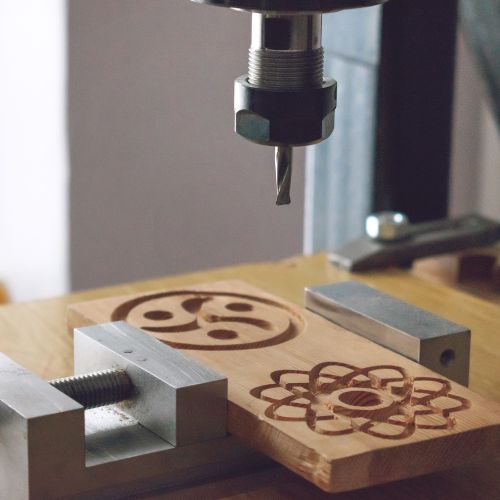
The instrument panel, seat frames, and interior components often have sophisticated curved lines that require high-precision machining. 3D CNC routers can process these parts by employing various materials based on CAD or digital templates.
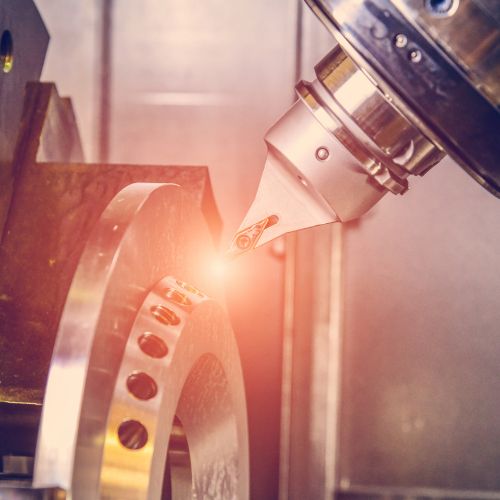
Light metal materials like aluminum and copper are easy to burr, deformations, or surface roughness during processing. 3D CNC routers have high-speed spindles, stable mechanical structures, and intelligent CAM software control systems, which can achieve high-speed, high-precision, and low-error processing.
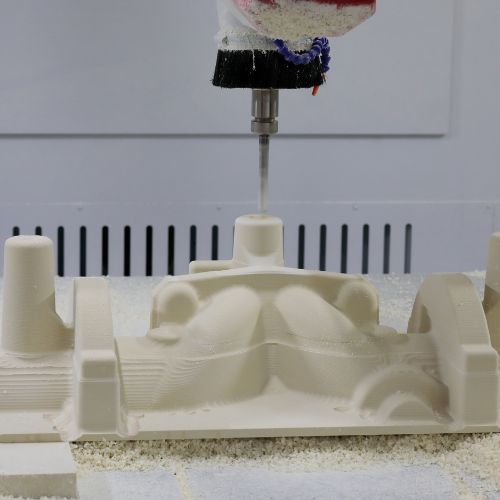
Injection molds, die-casting molds, industrial part prototypes, and product models are difficult to process and have strict requirements. 3D CNC routers can achieve precision machining of complex surfaces, grooves, and mesostructure in one go through multi-axis control and digital processing.
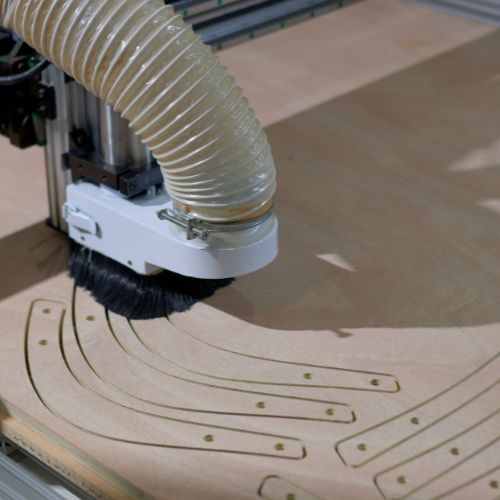
The guitar body, piano shells, etc., their structures are relatively complicated, and high precision requirements for curved surfaces. 3D CNC routers can perform high-precision engraving and milling processing through multi-axis linkage and digital control, and improve the overall quality of processes.
- Specification
| Parameters | Specification |
| Spindle Power | 1.5 kW / 3 kW / 5.5 kW(optional) |
| Spindle Speed | 0 – 24,000 RPM |
| Accuracy | ±0.02 mm |
| Repeatability | ±0.01 mm |
| Working Area | 1300*2500mm, 2000*3000mm, 2000*4000mm, 1200*1200mm, 2500*5000mm, 9000*6000mm, 1500*5000mm, 1300*5000mm |
| Max Cutting Depth | 100 mm (depending on the material) |
| Working Voltage | 220V / 380V |
| Tooling / Tool Holder Type | ER11 / ER20 / ISO spindle |
| Control System | CNC |
You need to know the following:
- Clean up the dust, debris, and foreign objects from the workstations, main shafts, guide rails, and motor areas.
- Lubricate moving parts like linear guides and ball screws.
- Inspect the condition of the belts, pulleys, and fasteners.
- Confirm whether the emergency stop device and safety interlock device are working properly.
The price mainly hinges on the workbench areas, main spindle power, machining accuracy, software functions, and body quality. For instance, the entry-level 3D CNC routers’ price is roughly $800-$1000, while the industrial 3D CNC routers’ price can reach $20000 or even higher.
Processing materials, tool types, and usage strength can affect the frequency of tool replacement in 3D CNC routers. High-speed steel cutting tools usually need to be replaced after using 5-20 hours, while hard alloy or coated cutting tools can be used for 50-200 hours.
With the X, Y, and Z three-axis linkage, the 3D CNC routers can be used to process 3D complex modeling, 3D carving, and molds, while regular CNC routers usually only have X and Y axes, with fixed or limited depth.
3D CNC routers can accurately control the Z-axis depth, a powerful spindle, and a stable clamping device, combined with advanced tool path programming, to cut multiple layers of materials at once and achieve multi-layer synchronous processing.
First, create a 3D model in CAD software and complete digital designs based on product structures and dimensional requirements.
Subsequently, using the CAM software to perform process analysis and path planning on the model, then converting 3D geometric information into executable tool paths and generating G-code machining programs.
For small or semi-professional models, the investment return cycle of 3D CNC routers is approximately 6-18 months, but for industrial-grade models, it’s about 12-36 months. And it depends on production scale, material costs, labor savings, and machine utilization.
In addition, optimizing cutting paths, batch processing, and regular maintenance can further shorten the return cycle.
What Is a 3D CNC Router?
The 3D CNC router is a computer-controlled process used to carve, cut, and shape complex 3D patterns on wood, foams, plastics, acrylic, medium-density fiberboard, aluminum, and other materials.
Compared with traditional 2D engraving machines, it can move along multiple axes to create precise 3D curved surfaces, sculptures, molds, and curved parts with high precision and efficiency. They are widely used in various industries, and you can use them to achieve customized productions.
3D CNC Router vs 2D CNC Router vs Laser Engraver
| Features | 3D CNC Router | 2D CNC Router | Laser Engraver |
| Axes | X, Y, Z (3D) | X, Y (+ basic Z) | X, Y (some with Z focus) |
| Cutting Depth | Variable, 3D relief | Fixed or shallow | Limited, surface engraving or thin cuts |
| Material | Wood, metal, plastics, foam | Wood, plastics, soft metals | Wood, acrylic, fabric, and some metals |
| Precision | High (mechanical) | Moderate | Very high (laser beam) |
| Speed | Moderate | Fast for flat cuts | Moderate to slow |
| Cost | Higher | Moderate | Moderate to high |
| Best Use | 3D carving, molds, decorative panels | Flat panel cutting, mass production | Fine engraving, logos, and thin cutting |
How to Choose the Right 3D CNC Router?
Define Your Application Requirements
Different industries need different machine configurations. Before choosing, you must figure out what materials your company wants to handle, what products will be manufactured, and what type of production process.
If your company mainly aims at producing large 3D sculptures or molds, you may need heavy-duty multi-axis 3D CNC routers with large working areas and a powerful spindle.
Choose the Right Number of Axes
Choosing the right axis configuration is critical because it directly impacts the machining capability and complexity of 3D CNC routers. For most woodworking and decorative applications, four-axis 3D CNC routers are highly suitable in terms of cost, flexibility, and functionality.
Evaluate the Machine Structure
It’s very important to evaluate 3D CNC routers’ structure before choosing, because a sturdy and durable frame directly affects machining stability, accuracy, and long-term performance.
For high-speed 3D engraving and continuous industrial production, a stable machine structure can guarantee smoother operation, higher precision, and longer machine lifetime.
Select the Appropriate Spindle Power
The cutting ability, processing speed, and materials compatibility of 3D CNC routers can be affected by the spindle power. Low-power spindles with a power range of 1.5-3kW are suitable for lightweight carving and soft material processing, while woodworking and general 3D carving typically use 4.5-6kW spindles.
Although higher spindle power can improve cutting efficiency, high-power spindles usually cannot meet all cutting requirements.
Consider the Working Area
The working area should match your company’s product size and production requirements. Common working areas include 1300 × 2500 mm, 2000 × 3000 mm, 1500 × 5000 mm, as well as customized large working areas.
Check the Control System & Software Compatibility
You need to inspect the control systems and software compatibility, because only when the systems are compatible with commonly used CAD/CAM software and can correctly parse G-code, can they guarantee accurate tool path and stable machining.
Otherwise, it will lead to errors, lower efficiency, and an increase in the cost of machine adjustment, even limiting later upgrades and production line expansion.
Focus on Precision & Repeatability
You should consider the precision and repeatability before selecting 3D CNC routers.
Generally speaking, industrial-grade 3D CNC routers aim at keeping long-term precision and stability, which makes them a preferred choice for applications that require continuous high-quality output and precise 3D machining.