
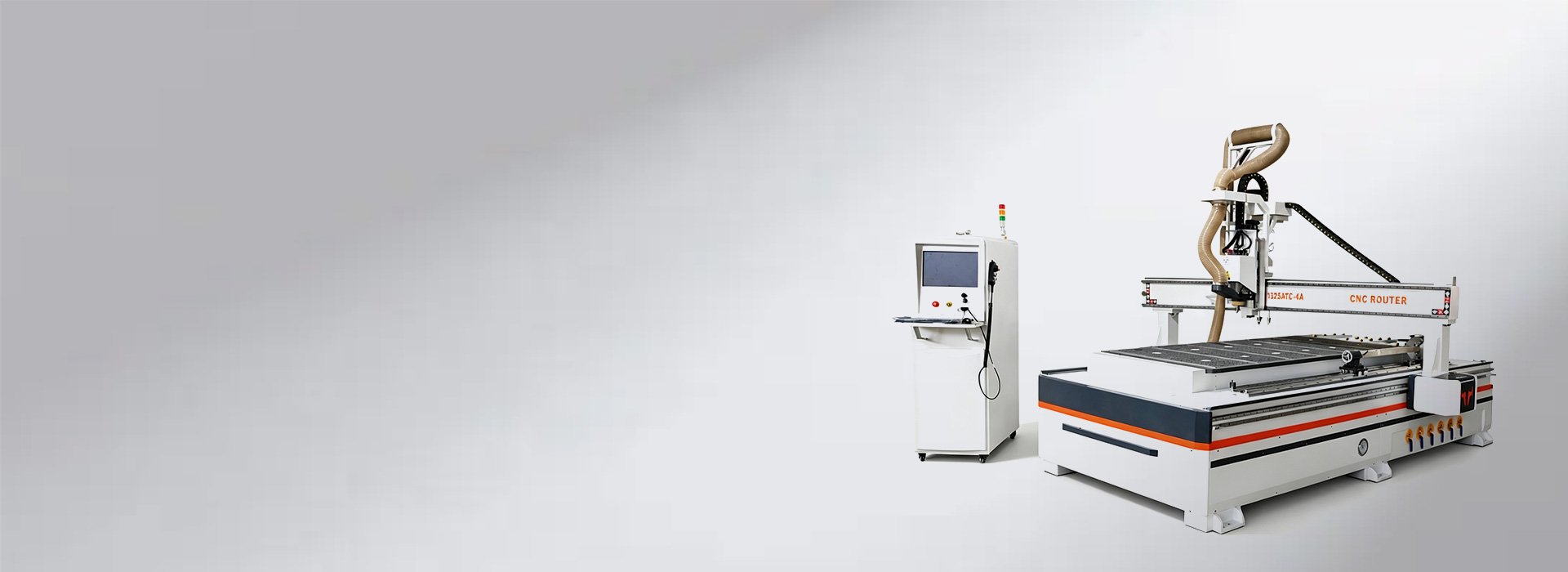
Rotary Axis CNC Router Manufacturer
The MC rotary-axis CNC routers are four-axis CNC machines (X, Y, Z, and A axis) equipped with an additional A-axis, enabling 360° rotation of the workpiece during machining. Our routers can easily perform cutting tasks—such as spiral grooves and angled holes—that standard cutting machines cannot handle.
At the same time, our rotary axis CNC routers handle multi-sided machining in a single setup, reducing time by 30% to 50%. We also offer custom services. If you need anything, please feel free to contact us.
Types of Rotary Axis CNC Routers
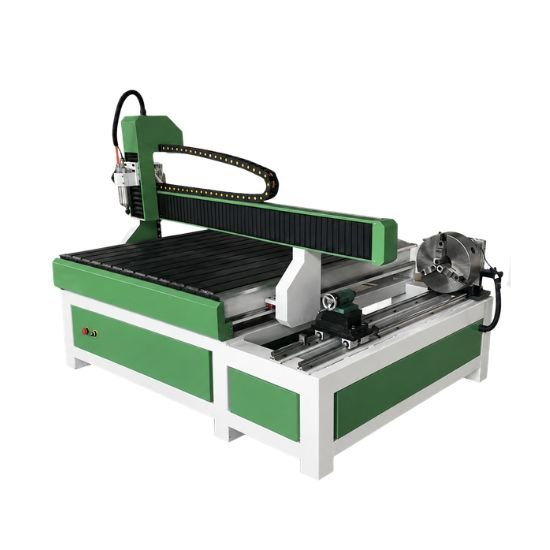
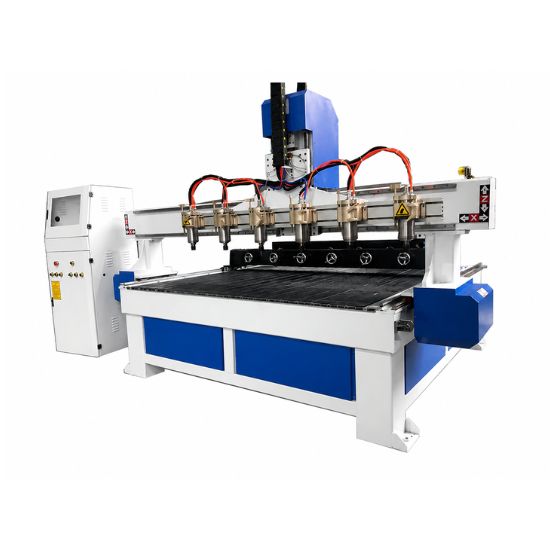
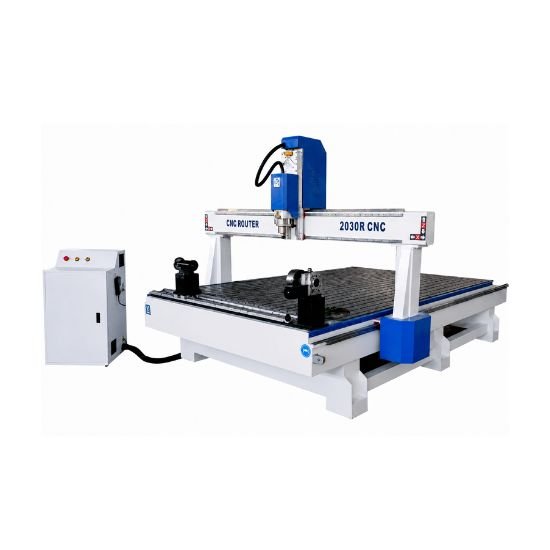
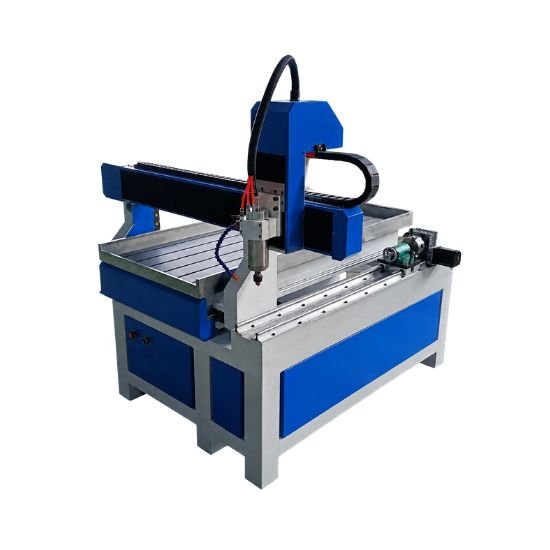
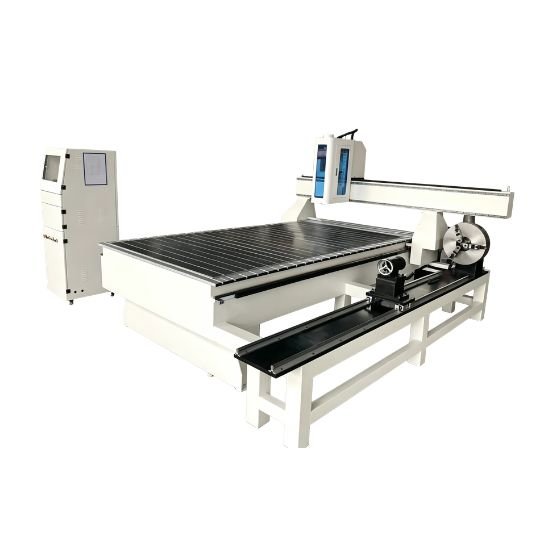
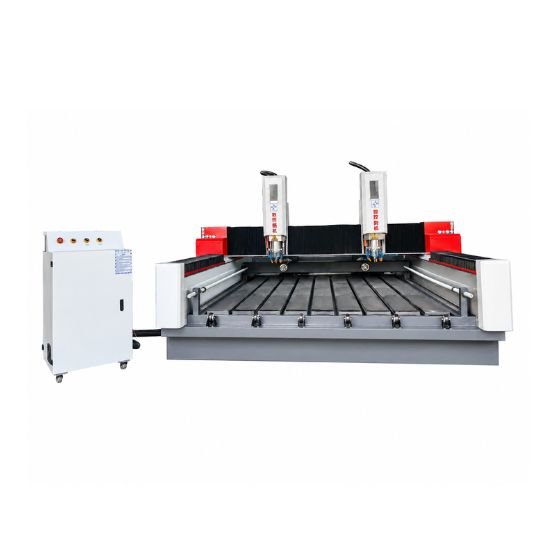
3m ultra‑long travel, vibration‑resistant frame, completes long workpieces in one clamping, perfect for Roman columns and railings.
Flat and Cylindrical Integrated Processing
Our machines handle both flat panels and rotary workpieces, such as cylinders and tubes. This means you don’t need to buy separate flatbed cutters and rotary engravers, reducing your investment costs. With one machine handling both processes, you require fewer setups and are less likely to make errors from repeated positioning.
In addition, our machines are equipped with touchscreen control systems. You can choose the processing mode on the interface, and the machine switches modes quickly.
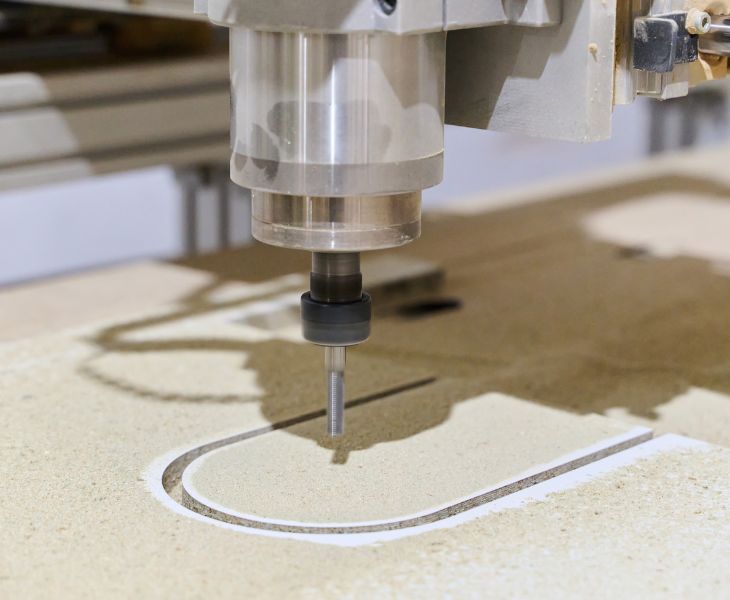
Powerful Water-Cooled Spindle
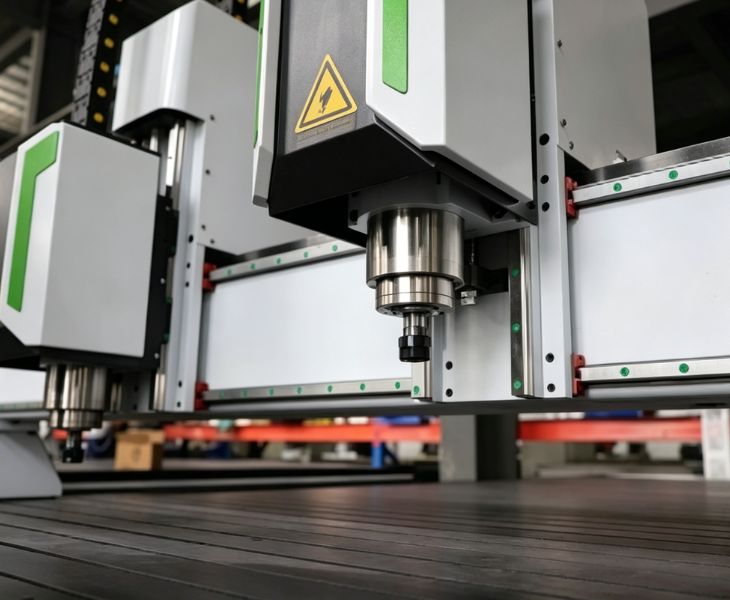
The MC rotary axis CNC routers are equipped with high-power water-cooled spindles that provide strong cutting force, so you can machine hard materials easily. The water circulation system removes heat during operation, keeping the machine from overheating.
Additionally, the water-cooled design ensures low noise, stable operating temperature, and reduced bearing wear.
Heavy-Duty Low-Bed Worktable
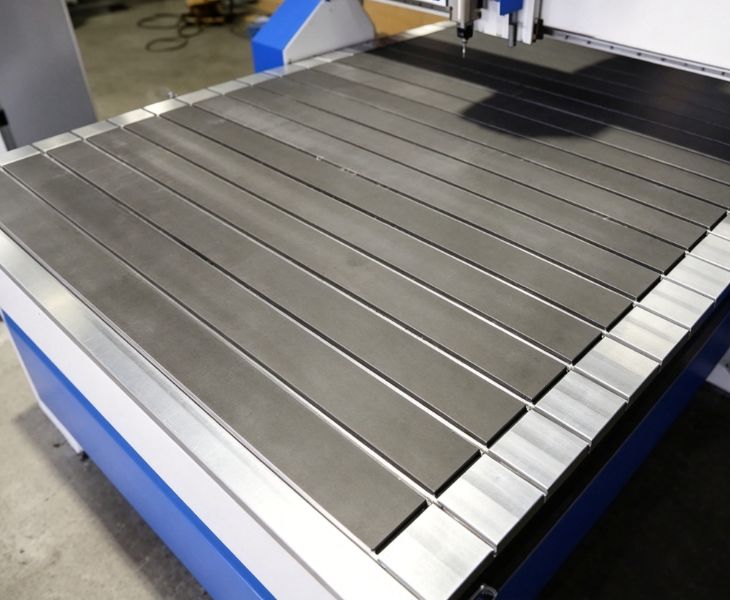
Our large-format rotary-axis CNC cutting machine features a heavy-duty welded steel frame. This structure delivers outstanding stability when cutting heavy workpieces. Even with large, heavy loads, the machine operates without vibration or deformation.
The machine also features a low worktable, which makes loading and unloading heavy sheets faster, safer, and more convenient.
Applications of Rotary Axis CNC Routers
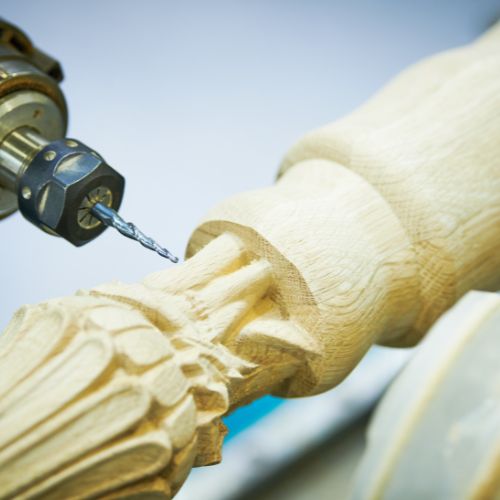
If you need to carve both flat panels and cylindrical columns, our rotary axis CNC router is a good choice. It is capable of processing solid wood and other hard materials while also delivering precise engraving.
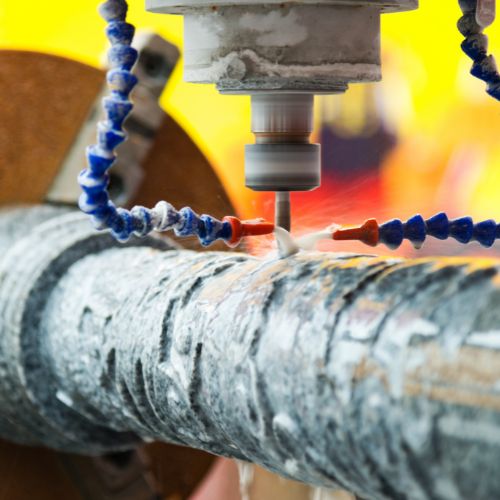
Stone carving requires a rotary-axis CNC cutting machine with high spindle power. Our machines are rigid and vibration-resistant, so they cut stone smoothly. With a powerful water-cooled spindle, they are capable of cutting various stones.
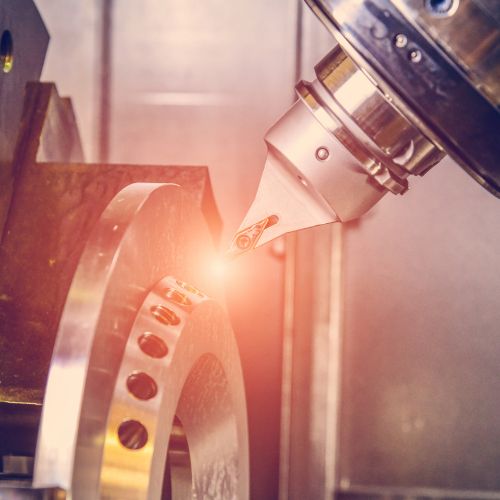
Vibration may occur during metal cutting and affect dimensional accuracy. Our machines feature a one-piece cast structure, so they cut metal sheets accurately. They also offer a wide range of spindle speeds, and you can choose the suitable speed for your material.
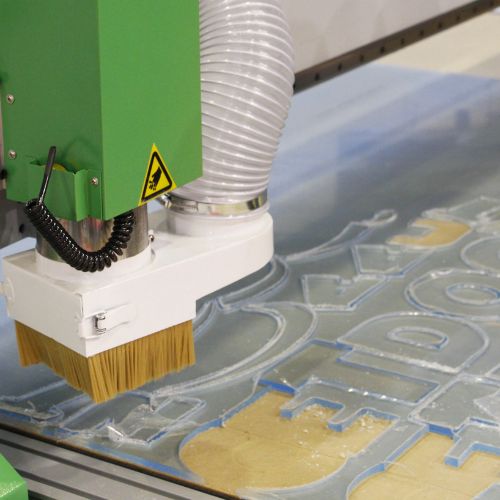
Acrylic products require smooth, transparent cut edges, so you need a machine with a high-speed, stable spindle. The water-cooled spindle on our rotary-axis CNC cutting machine runs at high speeds, ensuring smooth acrylic edges.
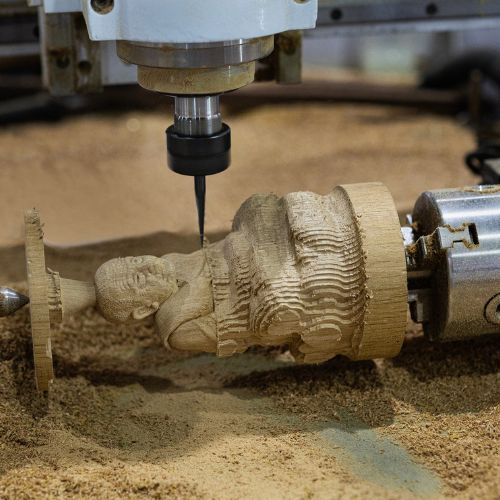
If you need to engrave or cut sample models, we recommend our 1200mm × 1200mm rotary-axis CNC router. Despite its compact size, the machine delivers cutting accuracy of up to 0.1 mm. This machine can engrave patterns within a 360° range, so it is suitable for small-batch prototyping.
- Specification of Rotary Axis CNC Routers
| Item | Specification |
| Working Size | 1200×1200 to 2000×3000 mm (optional) |
| Machine Type | 4-axis CNC router (X, Y, Z, A axis) |
| Structure | Heavy-duty welded steel frame |
| Max Rotation | 360° continuous rotation |
| Rotary Accuracy | ±0.01° – ±0.03° |
| Max Rotary Repeatability | ±0.01° |
| Max Workpiece Length | 600 – 3000 mm |
| Spindle Power | 3.0 kW / 5.5 kW / 7.5 kW / 15 kW |
| Spindle Cooling | Water-cooled spindle |
| Spindle Speed | 0 – 24,000 RPM |
| Motor System | Servo motor (optional) |
| Power Supply | 220V / 380V, 50 Hz |
| Lubrication System | Automatic lubrication |
Three-axis CNC engraving machines can only cut and engrave flat panels; they cannot produce 3D relief carvings. If you need to process complex workpieces, you will need to re-clamp them multiple times. In contrast, four-axis CNC cutting machines can handle both flat surfaces and circumferential engraving on cylindrical workpieces. Furthermore, you can complete the entire process with a single clamping.
It is not always necessary to use a CNC engraving machine equipped with a rotary axis for machining curved workpieces. If you just want to engrave some simple curves on flat panels, a three-axis CNC engraving machine will be enough. However, if you want to machine cylindrical workpieces, you must use a CNC engraving machine with a rotary axis.
Yes, our rotary-axis CNC engraving machines can be equipped with an automatic tool changer. You can choose either a linear or a rotary tool magazine. With the automatic tool changer, you don’t have to stop the machine to change tools by hand, which avoids manual loading errors and lets you get 30% to 50% more output.
Rotary axis CNC routers are designed for creating 3D carvings and round sculptures. They create fine details and smooth surfaces without visible step marks, so you won’t need much sanding afterward.
The most common method for clamping curved workpieces is to use a three-jaw chuck with soft shims. When clamping, place a thin copper sheet between the jaws and the workpiece to avoid damage. For long curved workpieces, use the tailstock center to support the free end, so the workpiece stays more secure.
First, use a professional coolant and replace it every one to two months. Additionally, you should regularly clean debris out of the radiator to prevent it from clogging the hoses. To ensure smooth water circulation, check the hose connections and pipes frequently for damage while the system is in use.
What is a Rotary Axis CNC Router?
The cutting tools on a standard three-axis CNC cutting machine can only move in the left-right, front-back, and up-down directions. This limits machining to flat surfaces or simple curved surfaces. A rotary axis CNC router is equipped with a rotary axis that allows the workpiece to be clamped and rotated automatically. With this rotary axis, you can machine three-dimensional workpieces like cylinders and tubes.
How the Rotary Axis Works?
Workpiece Clamping
First, you need to clamp the workpiece in the fixture and ensure that it is centered on the spindle axis. This prevents runout and vibration during machining. When clamping the workpiece, make sure that the fixture does not extend too far toward the spindle, or it could hit the spindle and cause damage.
File Loading
Once the workpiece is clamped, import your 3D rotary engraving file into the control system. The machine will automatically read the dimensions and toolpath information. Before machining, you can simulate to make sure the toolpath is correct and that there are no errors.
Zero Calibration
The rotary-axis CNC cutting machine features an automatic centering function. Simply select the auto-centering function on the control panel, and the machine will locate the workpiece center and apply the necessary offset compensation, ensuring that the toolpath remains aligned with the workpiece axis.
Automatic Rotary Engraving
Once the machine starts running, the spindle cuts the workpiece while the rotary axis continuously rotates it. With the tool and rotary axis working together, the cutting tool and rotary axis allow the machine to engrave the entire circumference in one pass, so you don’t need to flip the workpiece by hand or clamp it again.
How to Choose a Suitable Rotary Axis CNC Router?
Workpiece Size
To choose the right rotary-axis CNC cutting machine, first look at the diameter and length of your product. The machine’s rotary axis clamping range and effective travel must be larger than your actual workpiece size. This way, the cutting tool can reach every part of the workpiece during machining, giving you full coverage without any dead spots.
At the same time, you also need to leave some extra space to prevent the fixture from hitting the spindle while the workpiece rotates.
Material Hardness
The harder the material, the larger the machine you’ll need. If you want to cut soft materials like wood and plastic, you can choose a small- to medium-sized cutting machine. For hard materials like stainless steel and stone, you’ll need a large, heavy-duty one.
Machining Complexity
If you only need to do simple engraving, a standard-sized rotary-axis CNC cutting machine—like a 1200×1200 or 1300×2500 model—is enough. However, machining 3D wrap-around reliefs requires a large, heavy-duty rotary-axis CNC cutting machine with longer travel and a more stable structure.